Welcome to DU!
The truly grassroots left-of-center political community where regular people, not algorithms, drive the discussions and set the standards.
Join the community:
Create a free account
Support DU (and get rid of ads!):
Become a Star Member
Latest Breaking News
Editorials & Other Articles
General Discussion
The DU Lounge
All Forums
Issue Forums
Culture Forums
Alliance Forums
Region Forums
Support Forums
Help & Search
Automobile Enthusiasts
Related: About this forumIIHS Will Begin Rating The Safety Of Cargo Vans, Work Trucks, And Other Commercial Vehicles This Spring
IIHS Will Begin Rating The Safety Of Cargo Vans, Work Trucks, And Other Commercial Vehicles This Spring
BY LOGAN K. CARTER MARCH 20, 2026 3:25 PM EST
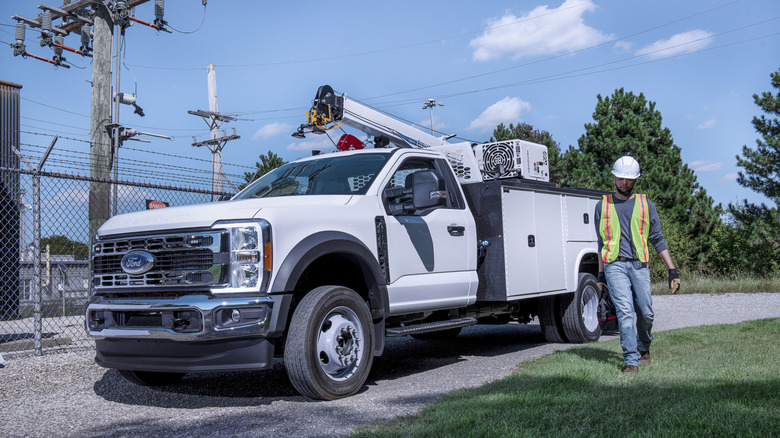
The Insurance Institute for Highway Safety, or IIHS, is best-known for its independent evaluations and rankings of new vehicles and their crashworthiness, but it does a lot more than that. It also encompasses the Highway Loss Data Institute (HLDI), which studies real-world crash data to determine sticking points for safety on U.S. roads. And last week, the IIHS announced that it will release its first safety ratings for cargo vans, work trucks, and other commercial vehicles this spring.
Unlike crash test ratings, the first commercial vehicle results will focus on whether the vehicles are equipped with things like airbags and advanced seatbelts, which they refer to as occupant protection ratings. Evaluation of the vehicle's crash avoidance capabilities will be published later. In a press release, Vice President of Vehicle Research at the IIS, David Kidd, said, "Cargo vans and big pickups are only the beginning. In the coming years, we expect to expand our evaluations to include box trucks and potentially even tractor-trailers."
Government safety standards that apply to passenger cars don't always apply to commercial vehicles, and 16% of all roadway fatalities in the U.S. in 2023 involved heavy or medium-duty trucks and light vans. The IIHS aims to reduce those numbers by issuing safety ratings for these vehicles.
{snip}
BY LOGAN K. CARTER MARCH 20, 2026 3:25 PM EST
The Insurance Institute for Highway Safety, or IIHS, is best-known for its independent evaluations and rankings of new vehicles and their crashworthiness, but it does a lot more than that. It also encompasses the Highway Loss Data Institute (HLDI), which studies real-world crash data to determine sticking points for safety on U.S. roads. And last week, the IIHS announced that it will release its first safety ratings for cargo vans, work trucks, and other commercial vehicles this spring.
Unlike crash test ratings, the first commercial vehicle results will focus on whether the vehicles are equipped with things like airbags and advanced seatbelts, which they refer to as occupant protection ratings. Evaluation of the vehicle's crash avoidance capabilities will be published later. In a press release, Vice President of Vehicle Research at the IIS, David Kidd, said, "Cargo vans and big pickups are only the beginning. In the coming years, we expect to expand our evaluations to include box trucks and potentially even tractor-trailers."
Government safety standards that apply to passenger cars don't always apply to commercial vehicles, and 16% of all roadway fatalities in the U.S. in 2023 involved heavy or medium-duty trucks and light vans. The IIHS aims to reduce those numbers by issuing safety ratings for these vehicles.
{snip}
2 replies
 = new reply since forum marked as read
Highlight:
NoneDon't highlight anything
5 newestHighlight 5 most recent replies
= new reply since forum marked as read
Highlight:
NoneDon't highlight anything
5 newestHighlight 5 most recent replies
= new reply since forum marked as read
Highlight:
NoneDon't highlight anything
5 newestHighlight 5 most recent replies
IIHS Will Begin Rating The Safety Of Cargo Vans, Work Trucks, And Other Commercial Vehicles This Spring (Original Post)
mahatmakanejeeves
Mar 2026
OP

Bobstandard
(2,451 posts)1. Uh oh. Republicans aren't going to like this
They don’t like anything that might make it harder for big companies to cut corners and make more money, worker safety be damned.

Old Crank
(7,463 posts)2. How about ratings for the killer front ends
Of standard pickup trucks and SUVs.
Which are rolling walls that are killing pedestrians and cyclists.