Welcome to DU!
The truly grassroots left-of-center political community where regular people, not algorithms, drive the discussions and set the standards.
Join the community:
Create a free account
Support DU (and get rid of ads!):
Become a Star Member
Latest Breaking News
Editorials & Other Articles
General Discussion
The DU Lounge
All Forums
Issue Forums
Culture Forums
Alliance Forums
Region Forums
Support Forums
Help & Search
Cooking & Baking
Related: About this forum
Catalonia 20: PICADA The Fourth Sauce! 🌞
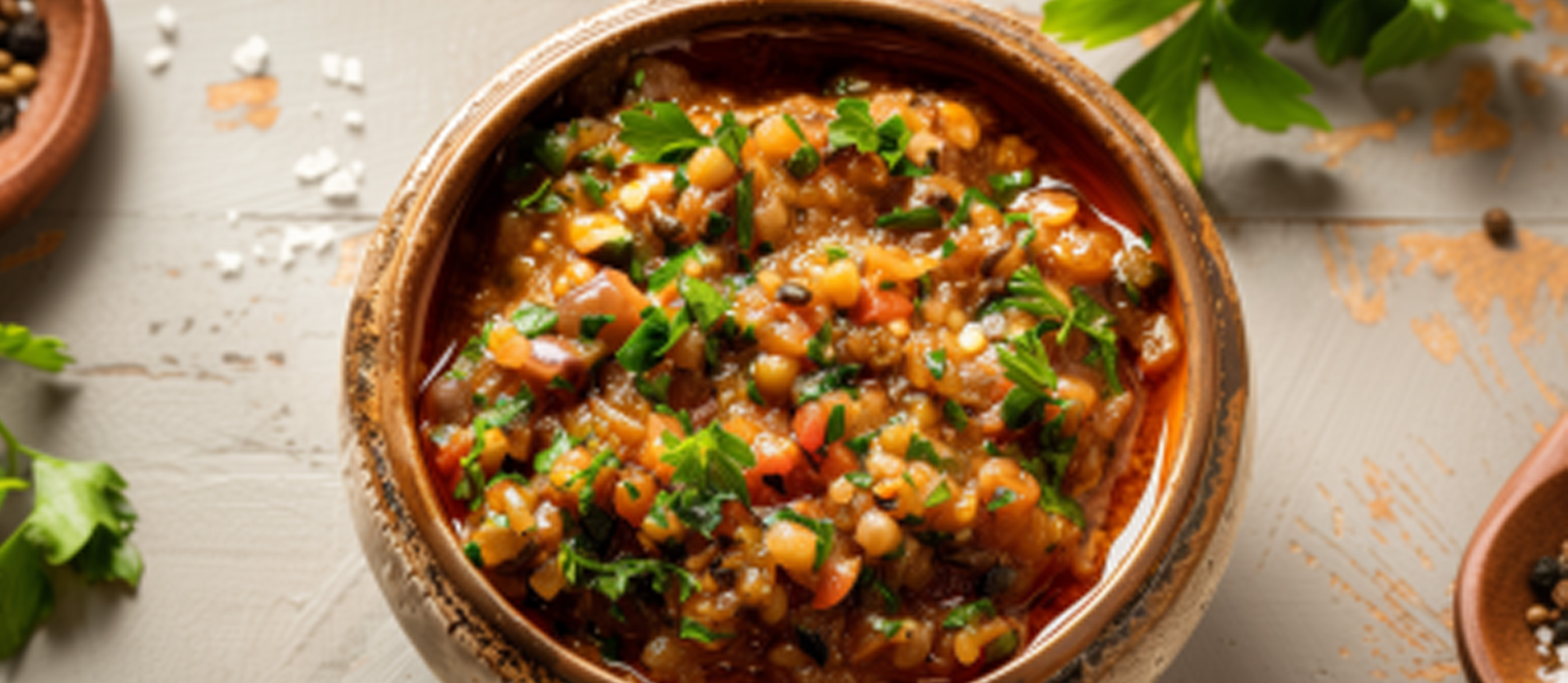
PICADA
The picada is, with sofregit, one of the
bookends of Catalan cuisine, helping to hold
dishes together and give them form. It has been
called the idiom’s single most important
sauce—though, as we have seen, it isn’t really
a sauce at all—and has been used in Catalonia
and vicinity at least since the thirteenth or
fourteenth century, and probably much
longer.
No other European cuisine has any-
thing quite like the picada—which, as noted,
is a thickening and flavoring agent made up of
such ingredients as garlic, fried bread, olive oil
(or some other liquid), and various nuts, herbs,
and/or spices, all pounded together with a
mortar and pestle. (The word picada itself,
which is modern, derives from the verb picar—
one of whose many meanings is “to crush."”)
The picada’s closest relatives are probably
Italy's pesto (which likewise involves garlic,
nuts, and herbs crushed in a mortar) and
gremolada (the Milanese herb-and-garlic mix-
ture traditionally added to osso buco)—but
pesto clearly is a sauce, and both substances,
unlike the picada, have limited and highly spe-
cialized uses, and a more or less regularized
composition. Another stylistic analogue to the
picada is the blend of pulverized spices, nuts,
seeds, etc. on which the moles of Mexico are
based—but these blends, too, are used only for
a single class of dishes, lacking the picada’s
versatility and range. (Anyway, though I’m not
for a moment suggesting that moles as we
know them might be partly Catalan in origin,
it is interesting to note that the most famous of
them, mole poblano, is said to have been in-
vented in a Spanish convent in Pueblo—and
that the most popular cookbook by far in the
Spain of the conquistadores was the Catalan
Libre del coch, in which the idea of the picada,
if not its name, figures prominently.)
When Paula Wolfert discovered the
picada while collecting Catalan recipes for her
book My World of Food, she thought it was
the best thing since sliced bread (which, after
all, is one of its ingredients)—and pointed out
that it might well have applications far beyond
Catalan cuisine. “The picada is the future of
cooking,’’ she went so far as to enthuse at one
point, That might be something of an exaggera-
tion, but the concept of the picada is undenia
bly a fascinating—and adaptable—one. Some
pages back, I called the picada ‘sort of a glori-
fied roux""—but in fact it doesn’t swell up as
dramatically as roux does, or thicken quite as
relentlessly. It adds more heart than heft. It is
also more complex in flavor than roux, con-
taining many more elements, and is said to be
much more easily digestible—simply because
the flour it contains has already been baked
into bread (and bread, of course, is easier on
the stomach than unbaked flour). The picada
is usually stirred into the pot a mere five or ten
minutes before cooking is completed, at which
time—as anyone who has ever tasted a dish
before and after its addition will testify—it
seems to fill in all the holes, plug all the gaps
in flavor. It’s a kind of secret ingredient. If it’s
made (and applied) correctly, you can’t even
really taste it—but you'd notice its absence in
an instant. You could indeed, I think (pace
Paula Wolfert), add some version of the picada
to non-Catalan dishes quite successfully
(Chili con carne, beef stew, spaghetti sauce,
and various kinds of gravy come immediately
to mind.)
There are innumerable variations on the
picada, The Big Rock restaurant in Platja
D’Aro, for instance, uses a bare-bones simple
formula of garlic, almonds, fried bread, and
olive oil. Ignasi Doménech’s classic cooking
text La Teca (which might be translated sim:
ply as “Food” or even Grub”), on the other
hand, prescribes a busy blend of oil, garlic, saf.
fron, almonds, hazelnuts, cinnamon, parsley,
and cookies soaked in sherrylike vi ranci
Other possible ingredients include chocolate,
walnuts, pine nuts (common in some regions),
marjoram and other herbs, nutmeg and other
spices, black peppercorns, even fish livers, sea
urchin roe, or well-pulverized baby crabs
(these last three in the Emporda region almost
exclusively).
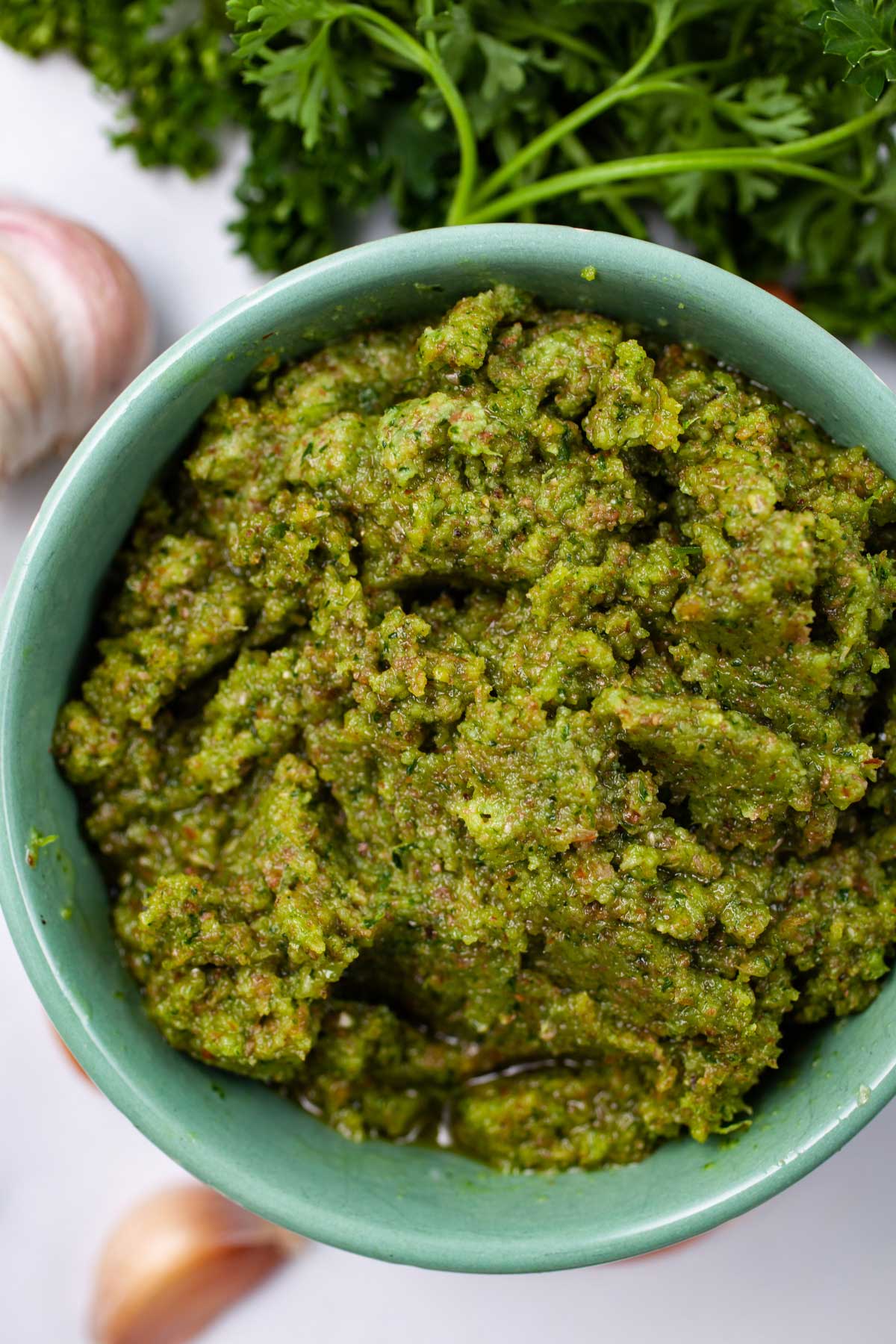
Here are notes on some of the ingredients most often used:
Almonds. Buy almonds preblanched
and skinless, or blanch them by covering them
with boiling water and letting them sit, off the
heat, for two or three minutes, then skin by
draining them, immersing them in cold water,
and rubbing the skins off gently with your
hands. (Some bits of almond skin may remain,
but won't adversely affect the picada, ) Before
use, almonds should be roasted in a 350-400"
oven until lightly browned. (Watch them
closely so that they don’t burn, and shake the
pan periodically to help them roast evenly. Dry
almonds thoroughly with a clean towel before
roasting if you have just blanched them.)
Roasted almonds will keep for at least three or
four weeks in the freezer, in a sealed plastic bag
or other airtight container, and need not be
thawed before use
Hazelnuts. These needn't be blanched,
but should be roasted as above. If they still
have their skins, rub them gently in a clean
towel or between your palms after roasting,
first allowing them to cool for 10 or 15 min.
utes. Hazelnuts, too, may be frozen and used
unthawed
Pine Nuts. These should always be
bought already shelled and skinned (they are
virtually impossible to shell and skin at home)
and, again, roasted as above. (They will take
less time to brown than almonds or hazelnuts,
so watch them particularly carefully.) I don't
recommend freezing pine nuts, as it seems to
affect their texture.
Fried Bread. Use any good French- or
Italian-style bread, preferably “country-style”
and not sourdough. The “slice” called for in
the recipes that follow is from a standard
French-style loaf, about 3 to 4 inches in diame-
ter; if you are using larger country-style loafs,
use half a slice instead. To prepare bread for a
picada, remove the crusts, slice it about half an
inch thick, and brown it in plenty of hot olive
oil. (The hotter the oil—up to a reasonable
point, of course—the less of it the bread will
absorb.) Drain the bread on paper towels, and
allow it to cool and dry a bit before using.
Chocolate. The chocolate used in sa-
vory dishes in Catalonia, in the picada and
otherwise, is usually a variety called xocolata
a la pedra—chocolate “on the stone,’ named
for the curved stone cradles on which it was
traditionally rolled out. Commercial brands of
xocolata a la pedra usually contain rice flour
and cinnamon in addition to cacao and some
sugar. The closest equivalent I've been able to
find in the United States is the Spanish (but
not Catalan) Ybarra brand of cooking choco-
late, which contains cacao, sugar, cinnamon,
and almond powder (in place of rice flour), and
adds lecithin, Some Catalan chefs prefer conventional
confectioner’s chocolate to xocolata a la pedra, the
former being somewhat sweeter,
and this works well, too. I don’t recommend
bitter or unsweetened chocolate, though.
Saffron. Though saffron is famously expensive,
a little goes a long way—and I recommend that
you use the best grade possible. To
the spice trade, that grade is usually designated
as Mancha Superior—though you'll seldom
find that name on a package. Mancha Superior
has a deep red color, almost blood-red, with
comparatively little yellow showing. (Always
buy saffron in thread form, in any case; powder
invariably conceals lower quality.) Saffron
should be toasted very lightly before use, pref-
erably ina dry skillet on top of the stove. Shake
the saffron constantly and be very careful not
to let it burn. (Saffron makes an excellent,
light, easy-to-carry souvenir of Spain, by the
way, and is much cheaper there than here. I
always bring back a quarter pound or so, for my
own use and for much-appreciated gifts.)
Parsley. Although any fresh parsley will
do for the picada (and for other uses herein),
Italian parsley is closer to the variety found in
the paisos catalans and lends dishes a much
better flavor.
PICADA
(CATALAN “ROUX”)
The exact composition of the picada
called for in the following recipes will vary
from one to the next, sometimes rather sub-
stantially. Here, though, is a basic, all-purpose
version.
TO MAKE 2 CUPS
2 cloves garlic, minced
15 almonds, blanched and roasted
15 hazelnuts, blanched and roasted
1 slice fried bread
1/4 teaspoon salt
2 sprigs parsley, minced
Olive oil
Crush or grind all ingredients, except the
parsley and oil, together with a mortar and pes-
tle or in a spice mill. (See note.)
Add the parsley, and mash it into the
mixture with enough oil to barely cover the picada,
then work it into the mixture slowly and
thoroughly to form a thick paste
Paula Wolfert's Mussels w/Picada Dish

Note:
The picada may be finished in a food processor or
blender if you wish, but it must be started in a mortar or
spice mill (preferably the former) so that the nuts and
bread are indeed pulverized together and not just finely
ground,
Remember: The constituent elements of a good
picada should not be recognizable in the finished dish, if
the grainy texture of ground nuts or breadcrumbs is dis.
cernible, the picada has not been properly made.
From "Catalan Cuisine" by Colman Andrews
This is one versatile sauce, and quick to whip up to boot!

