Rescue mission launches to save NASA telescope that's falling back to Earth
Source: AP
By MARCIA DUNN
Updated 12:18 PM CDT, July 3, 2026
Leer en español
CAPE CANAVERAL, Fla. (AP) — A three-armed spacecraft rocketed into orbit Friday to rescue a NASA telescope that’s in danger of crashing back to Earth.
Northrop Grumman launched Katalyst Space Technologies’ Link spacecraft from the Marshall Islands in the Pacific. The Pegasus rocket blasted off from the belly of a modified airplane, putting Link on course to reach and capture NASA’s Swift Observatory in about a month.
Launched in 2004, Swift is sinking faster than ever because of recent solar storms. NASA is paying $30 million for Katalyst to capture the telescope and boost its orbit so it can continue tracking some of the biggest explosions in the universe, like gamma ray bursts and exploding stars.
If all goes well, Swift could be back scanning the cosmos by September. Observations are currently on hold to preserve the telescope’s orbit as long as possible.
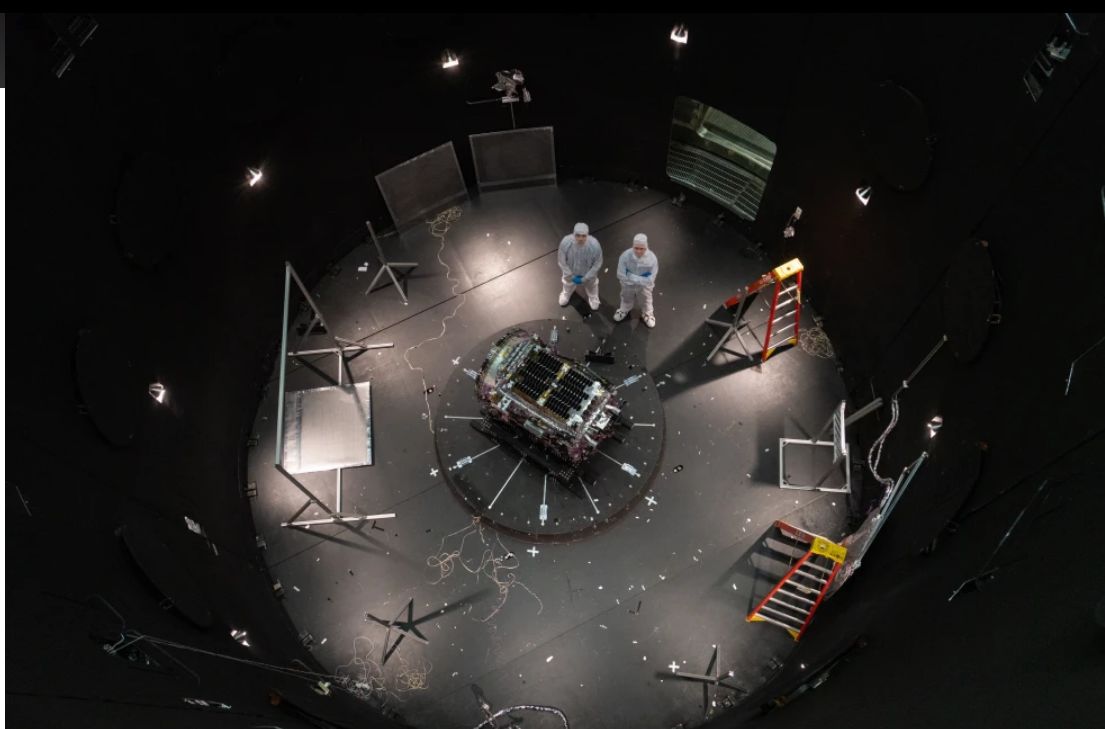
This photo provided by NASA shows Kieran Wilson, LINK’s principal investigator, and Hunter Robertson, a space systems engineer, both at Katalyst Space, standing next to their spacecraft inside the SES (Space Environment Simulator) at NASA’s Goddard Space Flight Center in Greenbelt, Md., April 17, 2026, ahead of thermal vacuum testing. (Sophia Roberts/NASA via AP)
Read more: https://apnews.com/article/swift-nasa-satellite-rescue-katalyst-a7ddd740ca099587c58865f583c7245a

 = new reply since forum marked as read


